This year, spring has been a bit colder, and not quite as wet. With the crazy temperatures in March and early April when we were teased by some warm days only to be followed by freezing nights, I think there were quite a few Daffodils that failed to bloom. Many of the Hydrangea macrophyllas were hard hit as well. If you are fortunate enough to have full sun and a somewhat protected site, you may have avoided this fate. For the rest of us, it was a disappointment. The month of May should see more consistently warm temperatures, and we’ll see many plantings taking off.
For the past few weeks, my Senecio aurea / Running Groundsel has been in bloom along the street. The bright yellow blooms can be seen from blocks away, and the gentle fragrance is a real treat as you walk by. WARNING…Just as the name implies, this plant is a runner, tough as nails, and will be difficult to contain. Plant where it can spread. I had a problem of erosion due to tracks from lawn mowers, so I now have Senecio instead of turf grass. Just weed wack 1x/year. The basal foliage stays evergreen all winter.
A FEW AMENDMENTS TO THE MARCH TIMELY TIPS
ITOH PEONIES – can be safely divided in the fall
DISCUSSION ON HYDRANGEAS
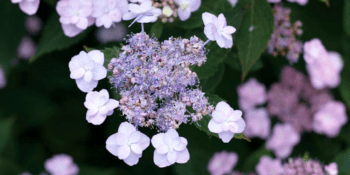
I left out of the discussion Hydrangea serrata / Mountain Hydrangea, and it deserves special attention. Over the past 10 years, we have seen the Hydrangea macrophylla die back to the ground by late spring freezes more times than we care to admit. Those of you who have the ‘Endless Summer’ type cultivars that are able to bloom on first and second year wood, then you’ve been lucky enough to have some flowers every year. But it’s never quite as nice a show as when all of the buds survive. The Hydrangea serrata blooms a little later than the H. mac., therefore, not quite as susceptible to the late spring freezes. As more folks learn about this beautiful alternative, the availability should increase. The Care & Maintenance for Hyd. serrata is the same as for Hyd. macrophylla.
This month’s featured plant is Hydrangea serrata.
KEEP TRACK OF TEMPERATURES
Enjoy the warm summer days that often surprise us in May, but also try to remember how difficult this is for our plants. If the weather suddenly turns warm, the plants will be experiencing stress and will need more water. A good rule of thumb is a 20 degree change in temperature is significant enough to cause stress. During the growing season, try to give your plants water 3x/week if at all possible. Just do the best you can. Remember a long, slow, steady soak is much better than a quick burst.
PEONIES AND ANTS
Have you seen ants swarming around your peonies? This is actually a good sign. Not only are ants NOT harmful, they are actually an example of biological mutualism. The peonies provide nectar (food) for the ants; the ants protect the peonies from aphids, thrips, and other non-beneficial insect pests. The ants are NOT eating the thin protective layer surrounding the flower bud. This is just a popular myth.
TIME TO DIVIDE PERENNIALS
Now, is the perfect time to divide and spread out many of the perennials. Frequently, it’s as easy as placing the shovel where you want to cut the plant, and dig straight down. The mother plant stays put, and the baby plant will be given a new home. Rule of Thumb…do not change the depth of the root mass, and soak immediately after planting to remove the unwanted air pockets.
DO…spread Holly-Tone within the drip edge of all your BROADLEAF EVERGREENS, and other acid-loving plants. It’s not too late.
DO…spread Plant-Tone within the drip edge of all other plants, but I usually limit myself to a liberal broadcast among all of my PERENNIALS. It’s not too late.
DO lay out protective rings of DIATOMACEOUS EARTH to protect large leaved perennials from slugs. Hopefully, I’ll get around to these chores soon.
ANNUALS…Now you can buy your annuals. Try something different this year. Experiment. You can always change it later. Feeding your plants once a week can make a huge difference in the performance. Miracle Gro, Peter’s Plant Food or Jack’s Classic Plant Food are options. If you use a slow release fertilizer such as Osmocote, then you may only need to apply 1x/month or less.
SPRING FLOWERING PLANTS…Your Helleborus should be dead headed to minimize the number of volunteer seedlings. Many of their seed pods are plump and ready to explode. Spring flowering bulbs will benefit if you remove the spent flowers and allow the foliage to remain until it turns brown.
GARDEN TOURS…Do you enjoy visiting private gardens? May and June is the best time to see most Maryland gardens. Be on the lookout for tours taking place throughout the state.
POISON IVY…Poison Ivy is already leafing out. At least now we have a fighting chance to avoid it. Please take precautions when in the vicinity of this irritating plant. Feel free to refer to the Poison Ivy Primer, now resident on my website.